
Not on waterfront or less than 10 years of age are not on our inspection schedule at this time.
Sewage System Maintenance Inspection Program (SSMIP)
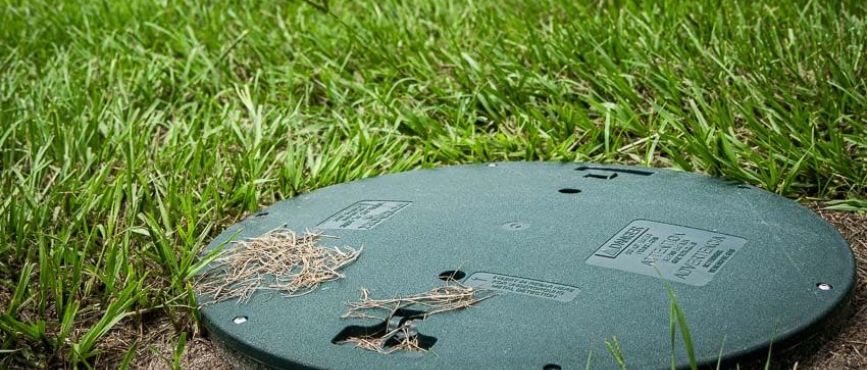
The Sewage System Maintenance Inspection Program (SSMIP) helps protect lakes, groundwater, and drinking water by making sure on-site sewage (septic) systems are working properly.
Most properties in the Township of Muskoka Lakes rely on private sewage systems rather than municipal sewers, which are limited to town hubs including Port Carling and Bala.
Regular inspections help identify small issues early, reducing the risk of costly repairs and environmental impacts. While there are five classes of sewage systems, Class 4 systems are the most common in Muskoka Lakes, with some properties using Class 1, 2, or 5 systems.
Status Update: 2026
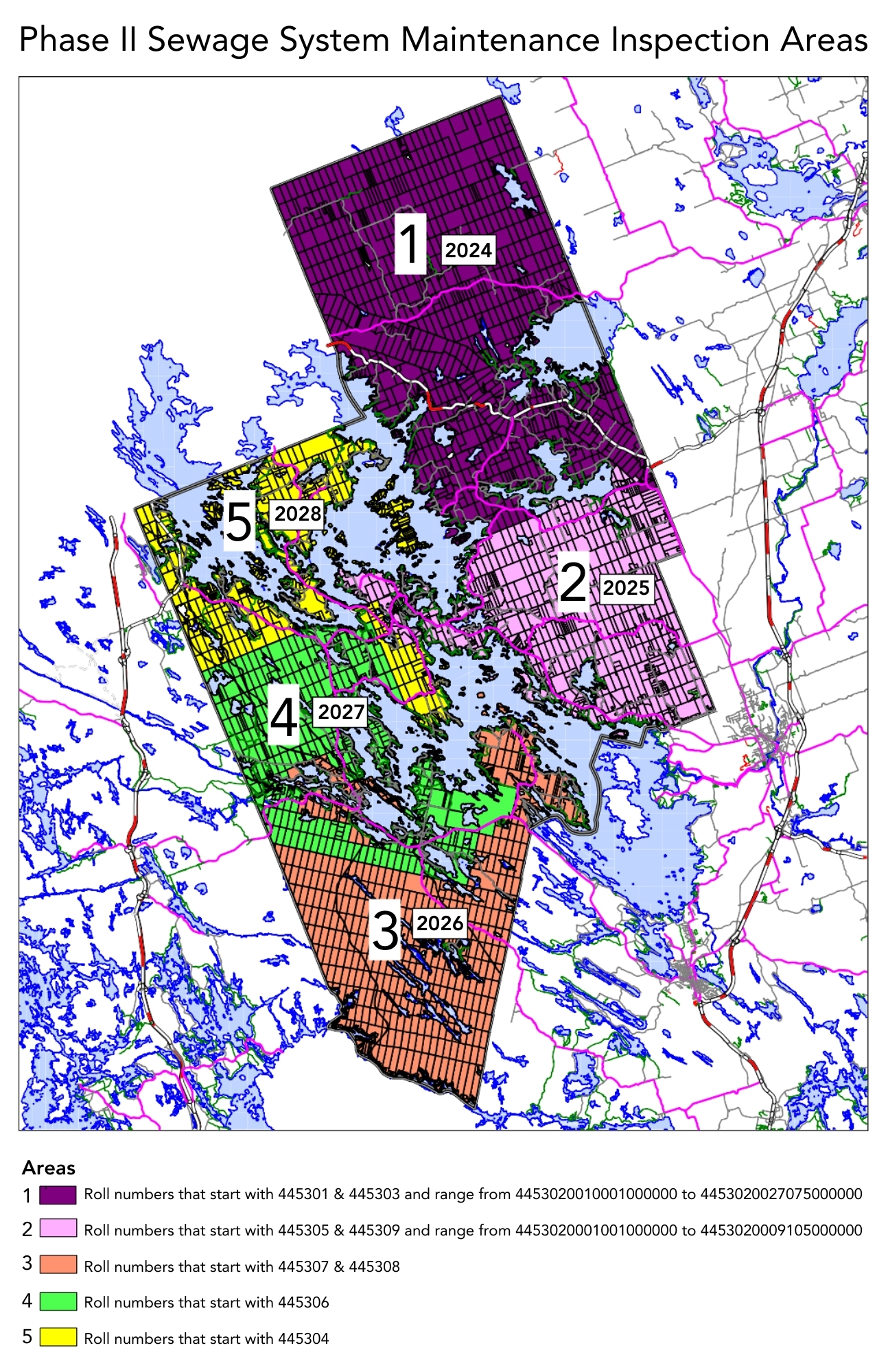
In 2026, Phase II inspections will take place in Zone 3 for all properties with roll numbers beginning with 445307 and 445308. Phase I inspections will also be conducted in Zone 3, with follow-up inspections continuing in Zone 1 and Zone 2.
Public Information Session
A Public Information Session will be held to provide further information and answer questions. This session is designed specifically for property owners in Zone 3.
| Date | Tuesday, May 19, 2026 |
|---|---|
| Time | 4:30 - 6:00 p.m. |
| Location | Council Chambers, Township of Muskoka Lakes (1 Bailey St., Port Carling) |
| Notes | If you are unable to attend or miss this session, a recording of the presentation will be made available on this webpage. |
A public information session is held every Spring, ahead of the next inspection phase.
About the Program
To ensure the Sewage System Maintenance Inspection Program works effectively and equitably across the Township, systems are first assessed by risk, then inspected through a phased, zone-based approach.
Sewage System Parameters
The Township has categorized more than 10,000 sewage systems based on factors that influence environmental and public health risk. These parameters help determine inspection priority and frequency.
Systems are classified as:
Waterfront, 10-30 years of age require a Phase I inspection conducted by Township staff. No appointment is required.
Waterfront, +30 years of age, no permit found or a Short Term Rental Accommodation will require a more invasive inspection. Stay tuned for how to book your HIGH RISK system inspection. A fee will apply.
Lakes with confirmed water quality indicators are prioritized, and sewage systems within those areas may be categorized accordingly.
Inspection Zones
To keep the program manageable and fair, the Township is divided into 5 inspection zones. Each zone is inspected on a rotating cycle, ensuring all properties are reviewed over time without inspecting the entire Township at once.
Why zones are used:
- The Township has thousands of private sewage systems
- Inspecting all systems in one year isn’t practical
- Zones allow inspections to happen gradually, consistently, and predictably
When a zone is scheduled, properties within that area may receive a Phase I and/or Phase II inspection, depending on system type, age, and inspection history.
How to Arrange Your Phase II Inspection
As a property owner in Muskoka Lakes, you have two options:
To notify the Township that an alternative third-party inspector will be utilized, please contact Tyler Sheppard, Sewage System Program Inspector/Administrator at tsheppard@muskokalakes.ca or 705 765-3156 Ext. 294.
Fees and Charges
Fees for inspections completed by EnVision are set out in Fees and Charges By-Law No. 2025-035.
| Fee Description | Applicable Fee in C$
(+HST, where applicable) |
|---|---|
|
Phase II inspection where previous permit approval record is available |
340.00 |
|
Phase II inspection where NO previous permit approval record is available |
355.00 |
|
Post Remedial inspection required |
210.00 |
|
No access / not ready for inspection |
225.00 |
|
Remedial Document Review |
25.00 |
*All invoices are subject to a $25 admin fee.
Frequently Asked Questions
Understanding Your Septic System
How can I find my sewage system?
There are a few ways you can locate your sewage system(s):
- Consult a Septic Tank Diagram or Map: This is the easiest way to find your septic tank, as it will indicate exactly where the tank and drain field are located on the property.
- Follow the Sewer Outlet Pipes: The main sewer outlet pipe is typically found in the basement or crawl space under your home.
- Check Property Records: Give us a call (705-765-3156) to see if we have a record of your septic system installations.
- Look for Permits: If you purchased your home, check the closing documents for any permits related to the septic system.
- Consult with Previous Owners: They may have firsthand knowledge of the septic system’s location and any maintenance history.
- Use a Septic System Locator Service: There are professional services that can help locate your septic system using specialized equipment.
- Physical Indicators: Look for signs in your yard, such as a manhole cover or inspection port visible.
Something to consider: Most septic tanks have two lids that must be uncovered before your inspection. Some lids are at ground level, while others may be buried. If your lids are concrete, this may be a good time to switch to plastic lids, which are easier to access for inspections and pump-outs.
Inspections & Zoning Timeline
The inspections are based on roll numbers; how do I find mine?
Your property roll number can be found at the top of your tax bill, on any correspondence related to the SSMIP, or on the inspection report provided by EnVision.
If you’re still unable to locate it, you can find your roll number using Muskoka Geo Hub:
In the top-left corner of the map, use the search bar to enter your address. The map will zoom to your property. Click on the yellow dot to highlight the parcel and open an information box. At the top, you’ll see Parcel: XXX. This number is your property roll number and typically begins with 4453.
Please have this number available when contacting the Township office.
Inspections will be occurring between May and October.
There will be a secondary letter sent if the services of a third party inspector are not obtained from EnVision outlining the date, time, cost and how to prepare.
The Township of Muskoka Lakes has developed a Risk Classification system for sewage systems which dictates the type of inspection required as well as the frequency in which the system is to be inspected. The full details can be found in the Township’s Sewage System Maintenance Inspection Policy.
Sewage Systems classified as “High Risk” include any sewage system:
- Without any record on file;
- Utilizing steel tank(s);
- Greater than 30-years-old; or
- Greater than 10-years-old and installed on a property abutting a waterbody where a water quality indicator has been confirmed in accordance with the policies of the Muskoka Official Plan.
Phase I Inspections | Overview & How To Prepare
I have a Phase I inspection; how can I prepare?
If the property is subject to a Phase I inspection, a letter will be hand delivered to the property address that requires the Phase I inspection, unless the property is water access only. In which a letter will be mailed to the mailing address on file.
These inspections are visual in nature and require minimal preparation. Seasonal staff will provide the letter noted above 2 weeks prior to the inspection. Inspections typically take 10 – 15 minutes, are only visual in nature and at no cost to the property owner.
Note: Some properties have multiple sewage systems servicing different buildings. Therefore, one may require a Phase I while the other requires a Phase II inspection.
Phase II Inspections | Overview & How to Prepare
When will Phase II inspections occur?
Fees associated with the SSMIP have been approved by Township Council under Fees and Charges By-Law 2025-136.
Costs for EnVision Consultants Ltd. to complete sewage system inspections are as follows:
- Phase II inspection where previous permit approval record is available - $340.00
- Phase II inspection where NO previous permit approval record is available - $355.00
- Post Remedial inspection required - $210.00
- No access / not ready for inspection - $225.00
- Remedial Document Review - $25.00
*All invoices are subject to a $25 admin fee. HST will be included to the above fees, where applicable.
Important Notes:
Properties where a third-party inspector have been retained beyond the April 1st deadline will incur an additional charge of $225.00 due to insufficient notice provided to the Township.
Properties that do not engage in the sewage system inspection program in the 2026 season will be assessed a $225.00 fee (+administrative fee & taxes) and required to comply with the program in the following year.
Property owners not compliant with the program requirements may also be subject to charges under the Administrative Monetary Penalty System (AMPS) Bylaw.
What if I have multiple systems on the property, does it cost me more?
Each system is inspected and invoiced separately.
For example, there are two separate systems on one property, one servicing the dwelling and the other servicing the boathouse. Each will be inspected and invoiced separately.
Systems will only be inspected if required, one may be newer and not require a Phase II inspection.
How will I know if my property is subject to the Phase II inspection?
All property owners required to complete a Phase II inspection will receive a notification letter by mail in early March outlining next steps.
If a property owner chooses to use an approved third-party inspector instead of the Township’s contracted consultant, this must be communicated to the Township before April 1 of that year.
What if I miss the deadline to indicate the use of an alternate third party to the Township?
If the Township is not notified of a property owner’s intent to use a third-party inspector before April 1, an additional fee of $225.00 may apply.
This fee covers work already undertaken by the Township’s consultant to initiate inspection planning and review.
My property is serviced by a treatment unit; do I still need a Phase II inspection?
Yes.
Properties serviced by treatment units are still required to complete a Phase II inspection, conducted by a qualified inspector.*
Before the inspection, property owners must provide their inspection party, either EnVision or an approved third-party inspector, with a copy of the most recent service report or maintenance contract from their treatment provider. Additional fees may apply if this documentation is not submitted in advance.
*Qualifications to confirm:
- Licence or certificate holders under the Architects Act
- Licence holders under the Professional Engineers Act
- BCIN-qualified designers with Ministry of Municipal Affairs and Housing Part 8 Sewage
My property is serviced by a holding tank; do I still need a Phase II inspection?
Yes.
Properties serviced by treatment units are still required to complete a Phase II inspection, conducted by a qualified inspector.*
Before the inspection, property owners must provide their inspection party, either EnVision or an approved third-party inspector, with a copy of the most recent service report or maintenance contract from their treatment provider. Additional fees may apply if this documentation is not submitted in advance.
*Qualifications to confirm:
- Licence or certificate holders under the Architects Act
- Licence holders under the Professional Engineers Act
- BCIN-qualified designers with Ministry of Municipal Affairs and Housing Part 8 Sewage
When will I receive an invoice for my Phase II inspection?
All fees related to Phase II inspections conducted by EnVision will be invoiced exclusively by the Township of Muskoka Lakes.
Invoices are typically issued 2–3 weeks following the inspection.
How do I prepare for my Phase II inspection?
Property owners are required to expose (uncover/unbury) tank lids, which include tanks such as septic tanks (there are two), pump tanks and distribution boxes. This MUST be completed prior to the inspection.
Properties serviced by treatment units – please share a copy of the most recent service report/contract from your treatment unit provider with your inspector preferably prior to the inspection or on inspection day to avoid further fees.
Properties serviced by holding tanks – please share a copy of the most recent haulage agreement from your haulage provider with your inspector preferably prior to the inspection or on inspection day to avoid further fees.
If you are unsure of where the lids are located, please contact the Township office. We may be able to assist you.
Do I need to be present at the time of inspection?
No, you do not need to be present for the inspection, as long as all tank lids are accessible.
However, it is recommended that you or a designated representative over the age of 18 attend on your behalf. This allows for a better understanding of the inspector’s observations and how your sewage system operates.
What is included in the inspection?
Inspections focus on key sewage system components, including septic tanks, pump tanks, distribution boxes, and leaching beds. Each component is assessed for functionality and overall condition, with findings documented and provided to the property owner.
Additional testing, such as flow testing or soil sampling, may be required. Inspectors may also request information about water supply, number of bedrooms, and total floor area to support a complete and accurate inspection.
Should I have my sewage tank pumped prior to the inspection?
This is not necessary, however if you plan to have your tank pumped before the inspection, it must be completed at least 6 weeks in advance.
Please inform your inspector ahead of time so any necessary scheduling adjustments can be made.
Sewage System Maintenance Tips
Toilet paper and human waste only! Avoid harsh chemicals, bleaches, degreasers, septic system additives, oils, greases, solids, and pharmaceuticals.
Vegetation Around your Sewage System
A properly functioning leaching bed must have appropriate vegetative cover to allow for evaporation, transpiration, compaction prevention, and optimal treatment of wastewater.
One of the most common issues our re-inspection team comes across is inappropriate vegetation on and around the system. Deep-rooted vegetation such as trees and berry bushes can and will grow into the leaching bed pipes causing system failure. We recommend a minimum distance of 6 meters from the pipes in the bed to woody plants. For very shallow-rooted trees such as poplar, maple, willow, elm and sumac we recommend a more extreme distance of 15 metres from tree to pipe.
Appropriate shallow-rooted vegetative cover over a leaching bed includes grasses & native wildflower mixes. It is important that the vegetation planted is drought tolerant as the leaching bed area should not be irrigated as to not overload the system.
Since 2007, a device called an ‘effluent filter’ has been a requirement with every new septic tank installation. The effluent filter is attached to the outlet pipe within the liquid side of the septic tank. This device is a great addition to the system as it can prolong the life of your leaching bed by filtering out solids (ie. corn kernels) and small particles (ie. fuzz from your favourite fleece sweater) before clogging pipes and soil pores.
The effluent filter requires regular maintenance – we recommend having it checked and cleaned at a minimum of once per year.
As an added bonus, the bacterial life that establishes on the surface of the filter acts as additional biological treatment of the wastewater before it makes its way into the natural environment!
Septic Tanks are divided into a solids and liquids compartment. The first compartment of the tank is for the solids. The solids settle to the bottom of the tank forming a sludge, while greases and fats float to form a scum layer. According to the Ontario Building Code, the tank must be pumped whenever the scum and sludge occupy one third of the tank. It is important to pump the septic tank at this stage to ensure the solids do not build up and make their way into the leaching bed; this can lead to clogging of the pipes and even system failure.
It is important to note that there is such a thing as pumping the septic tank too frequently. If the tank is consistently pumped before bacteria has a chance to establish and find its equilibrium in the tank, the sewage can become sterile. Sterile sewage is essentially ‘dead’ and not properly treated before it makes its way into the leaching bed and environment.
It is crucial to create a customized pumping schedule with your sewage hauler that suits your usage. For example, a system that is used seasonally by two people will not need to be on the same pumping schedule as four-season usage by a family of 5. There are many licensed sewage haulers in the Muskoka Lakes area that are full of knowledge.
There are over 100 ways an onsite sewage system can malfunction. The signs to look out for include: sewage backup into the house, sluggish drainage of plumbing fixtures, sewage surfacing in the yard, and/or sewage odours. If any of these problems occur, call a professional to troubleshoot the issue. The solutions range from the replacement of a pump, to a blocked effluent filter, to a leaching bed replacement.
According to the Ontario Onsite Wastewater Association, septic systems and can last for upwards of 20 years. As leaching beds are not made to last forever, if your sewage system is reaching 20 years of age, you should begin to save and prepare for a replacement system.
In Muskoka, many systems get a break and are only used seasonally. We also have access to quality granite-based sands and stone – note that this may prolong the life of some systems in our area.
Directing surface water and stormwater away from your septic system is imperative for a properly functioning system. The systems depend on dry unsaturated soils to treat the wastewater within and around the leaching bed.
Quite often when a leaching bed is not fully mounded up; drainage swales, French drains, or ditches are created upslope of the bed to keep the system as dry as possible. These water diversion methods are often enforced at the time of the installation as part of the septic system construction inspection.
An issue our re-inspection team runs into are newly constructed driveways or landscape alterations which direct water towards the sewage system, instead of away from the area. Be mindful of this when planning your projects.
The above reasons are why it is also a requirement that eavestroughs be directed away from the system and why the leaching bed should never be irrigated.
Septic Systems 101
Source: Coalition of Haliburton Property Owners Association
Useful Resources & Support
Contact Information
Email the Sewage System Inspector / Administrator
or call 705-765-3156 ext. 294
Province of Ontario | Septic Systems Rural Septic System Checklist
Contact Us
Township of Muskoka Lakes
1 Bailey St., P.O. Box 129,
Port Carling, ON, P0B 1J0
T: 705-765-3156 F: 705-765-6755
Office Hours: 8:15 a.m. to 4:00 p.m.
Subscribe to Township News
Stay informed about Township operations, programs, emergency notices and more by subscribing to our news updates.